One point of contact
The same person from enquiry to handover. Not a hand-off to an account team once the order is signed.
Ask us for thirty benches and this is exactly what happens next. Every project, whatever its size, moves through the same five stations.
Enquiry to delivery
The route
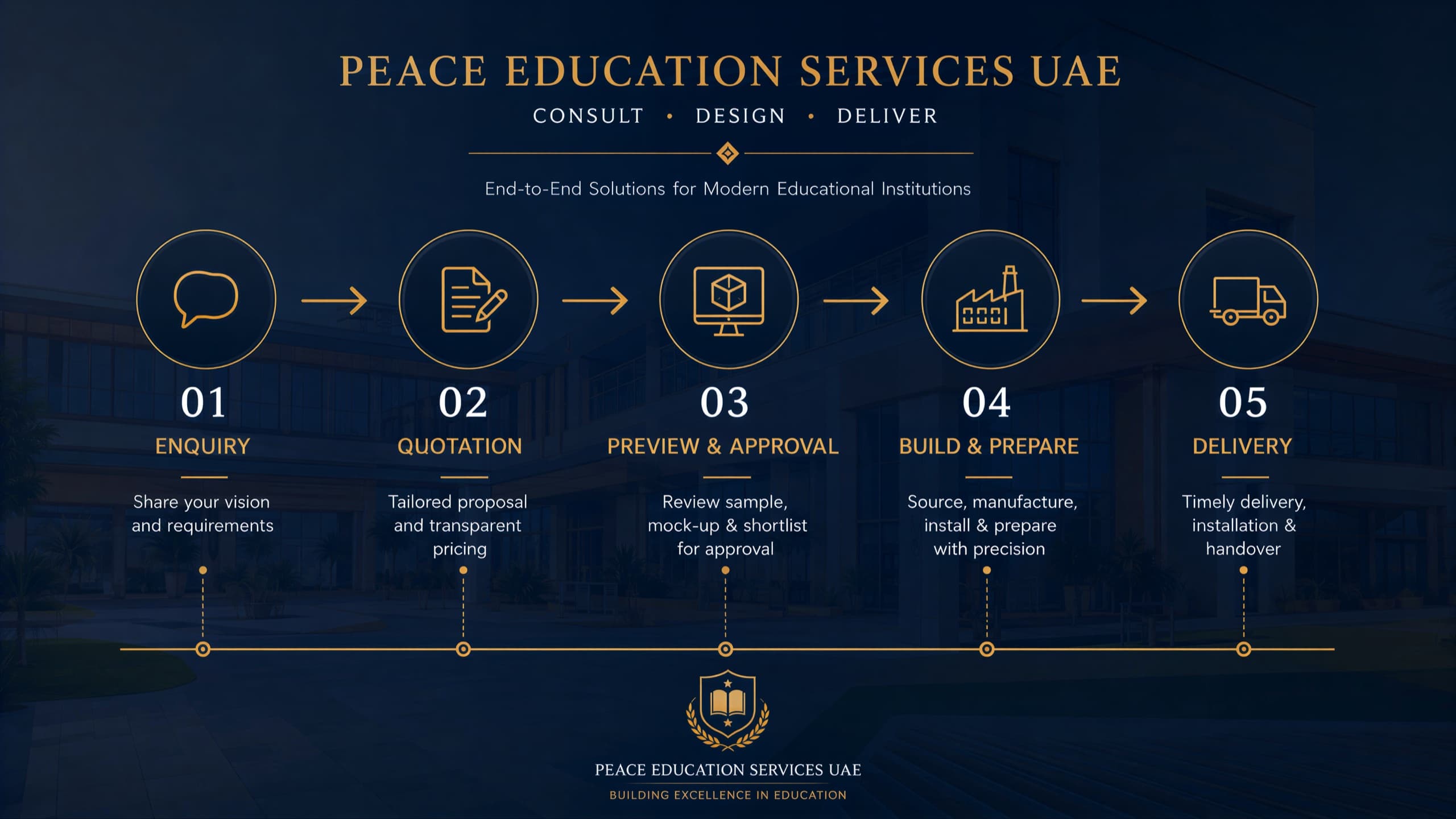
Thirty benches and a whole campus travel the same route. The size of the project changes the duration, never the sequence.
Tell us what the school needs: thirty benches, one laboratory, or a whole campus.
An itemised quotation within days, priced honestly and built to be compared.
Before anything is committed, you see the real thing and approve it: a sample, a mock-up, a shortlist, a session.
The approved specification goes into production: manufactured, sourced, recruited or written, depending on what you bought.
Installed and handed over on time, ready for the first day of term.
The route, on one sheet
One conversation, and it is a conversation rather than a form. We want the need in your words, the date it has to be met by, and the constraint you are actually working under — the budget, the inspection, the licence, the opening. Small enquiries get the same attention as large ones, because a school that starts with thirty benches is a school we would like to still be working with in five years.
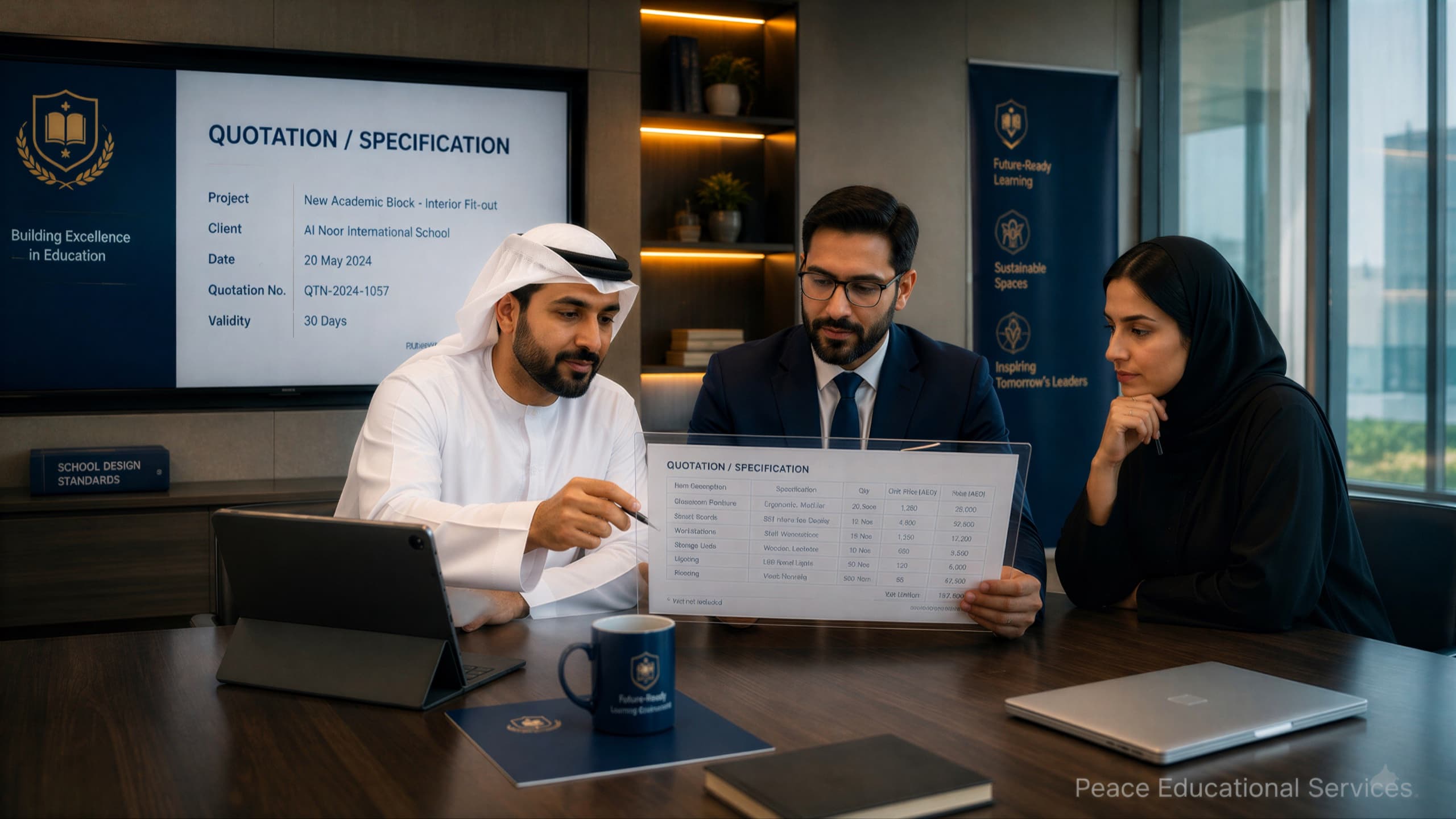
Itemised, against a written specification, with lead times stated. Deliberately built so you can put it beside another firm's quotation and compare like with like — including the lines most quotations bury, such as freight, installation and training. If we think part of what you asked for is the wrong purchase, that is in the quotation too.
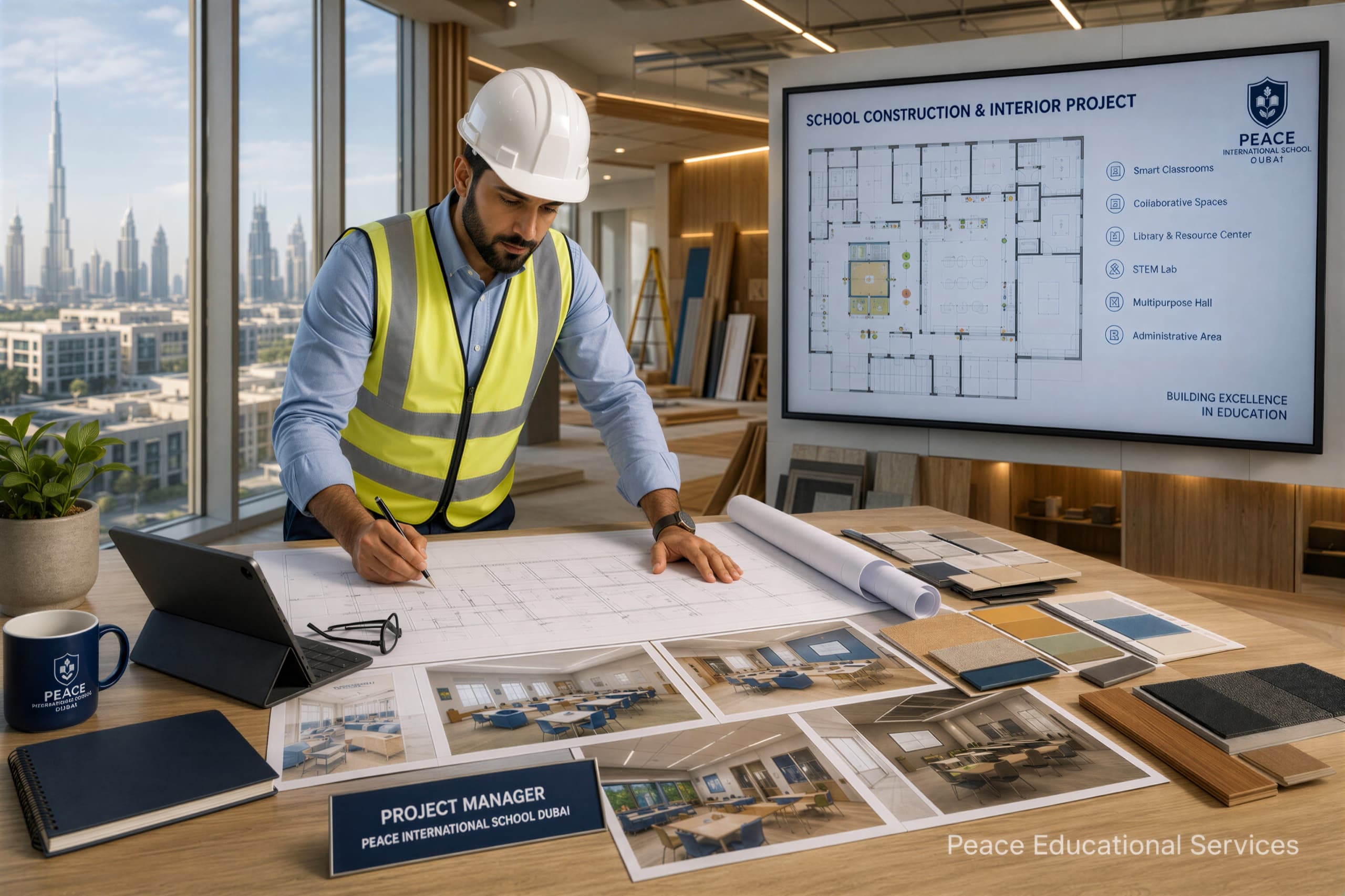
This is the station most suppliers skip, and it is the one that prevents the expensive argument. What you are shown depends on what you asked for — a chair you can sit on and a fabric swatch you can rub, a laboratory laid out in a drawing, a demonstration lesson taught to your own students, four shortlisted teachers you can actually meet, a training session run for a handful of staff before it is run for all of them. Nothing goes into production, onto a contract or in front of a class on the strength of a description, and nothing is ordered in bulk before somebody at your school has approved the thing itself.
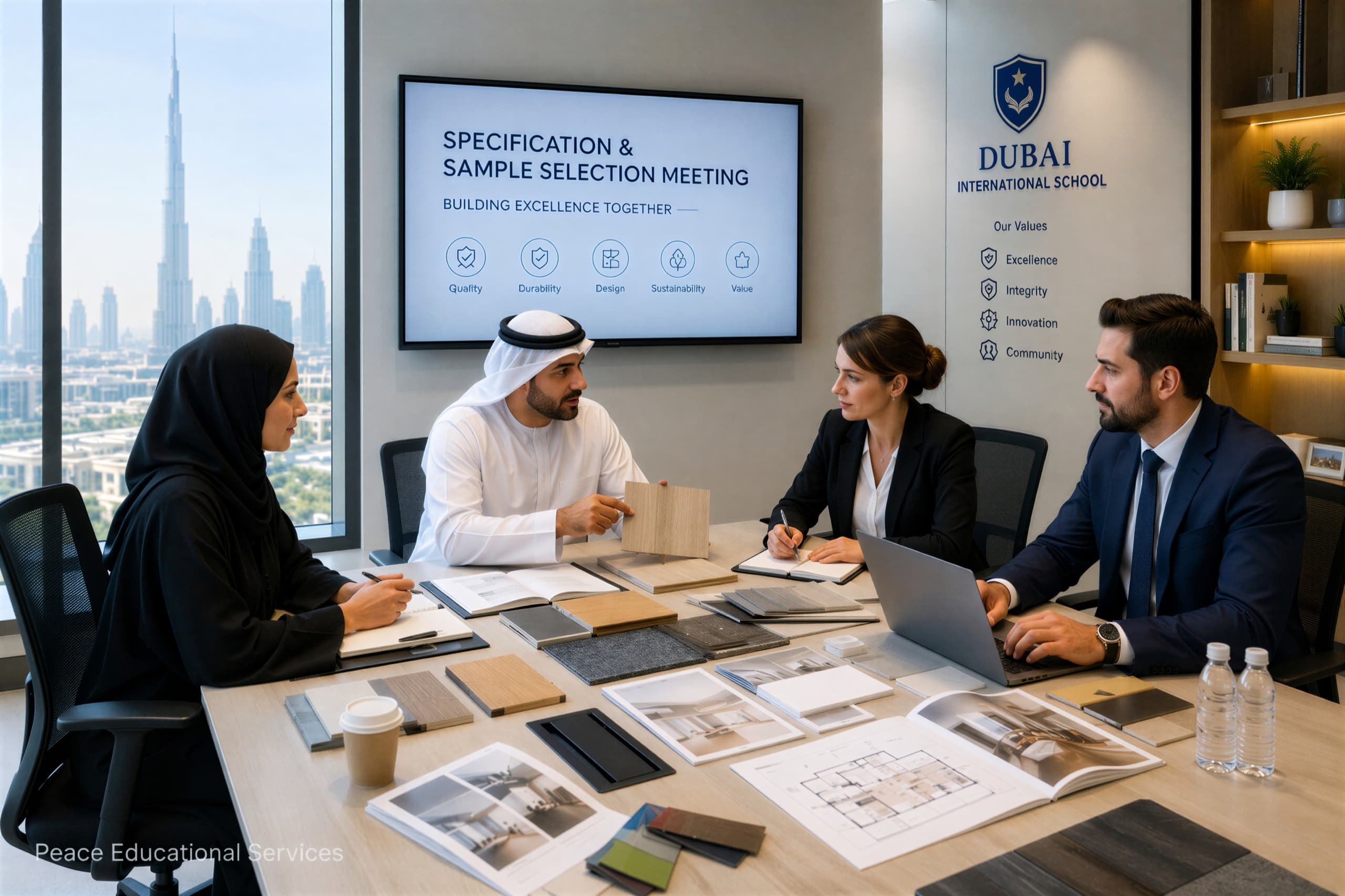
Work runs against what you approved, not against the original enquiry. Furniture and laboratory equipment go to our manufacturing partners across India and the UAE; books, supplies and uniforms go on order against the written specification; appointments go through referencing and paperwork; a training programme gets written for your staffroom rather than pulled off a shelf. We check during the work rather than on arrival, because a colour or a dimension caught at the factory is a correction and the same problem caught at your gate is a delay. Progress is reported against the date you were given at quotation.
Freight, clearance, delivery, installation and a room-by-room check against the schedule. The date is the one committed to at quotation, and if it is ever at risk you hear it from us before it is obvious to you. Then somebody stays available afterwards, because the first month of use is when the questions actually appear.

Our commitments
The same person from enquiry to handover. Not a hand-off to an account team once the order is signed.
Specifications, quotations and dates exist as documents. Anything agreed on a call is confirmed in writing the same week.
If a date slips or an item is unavailable, you hear it as soon as we know, with options attached.
We stay reachable through the first term of use, because that is when a school finds out what it actually bought.
Our role
We do not believe in selling a solution before understanding the problem, and we do not manufacture every product or perform every specialist service ourselves. No honest firm this size could — and a firm that implies it does has told you its first lie before the meeting starts.
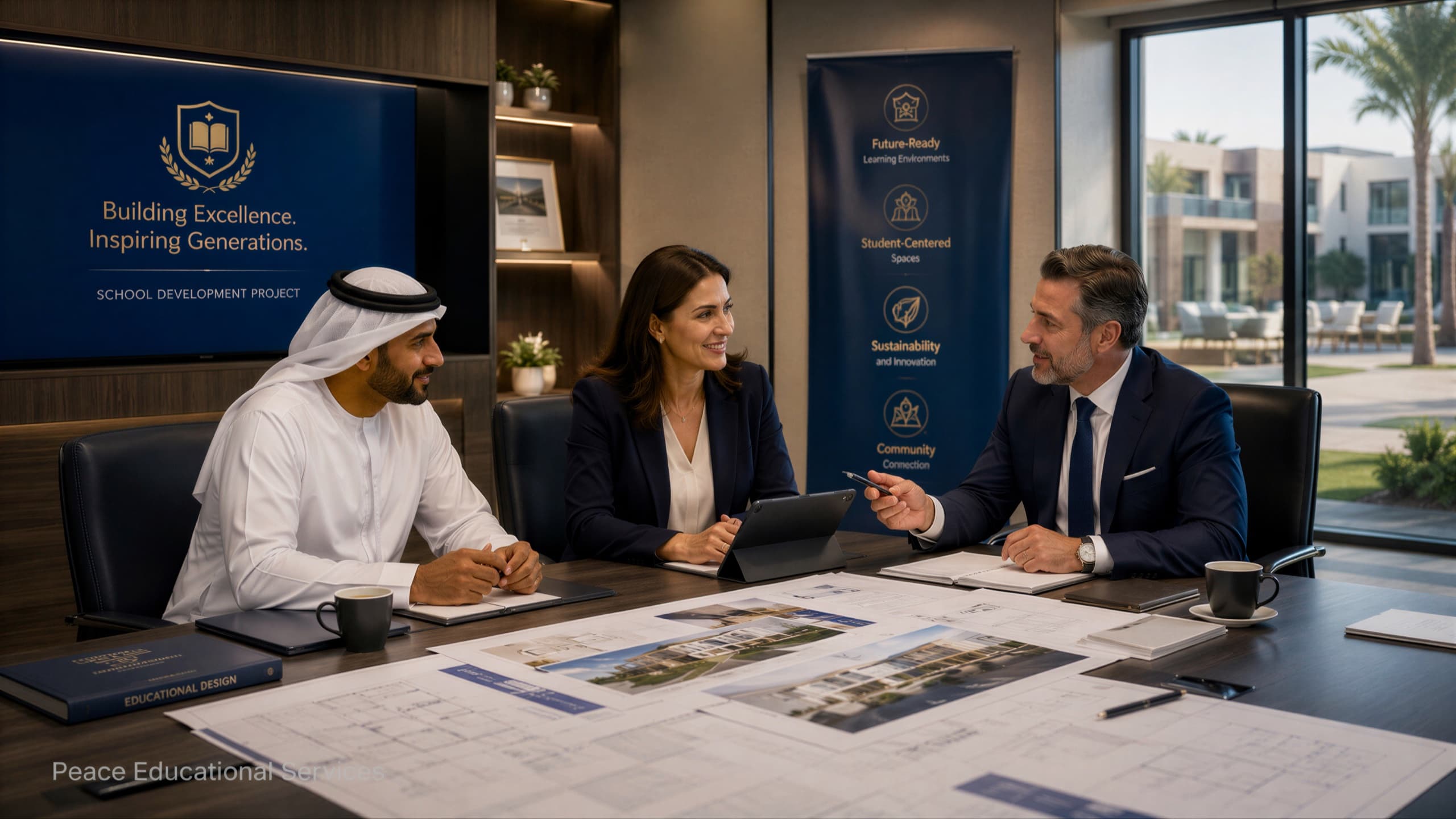
What we are is the partner who holds the whole picture: we understand the need, develop the specification, identify suitable specialists, compare the alternatives honestly, and coordinate the work until it is standing in your school and being used. Where the work is ours — advisory, training, planning, coordination — we do it ourselves. Where it needs a manufacturer, a publisher or a licensed specialist, we bring the right one and stay accountable for the result.
That is the model. It is also why the comparison on our table can be honest: we are not protecting a factory.
Start the conversation
Whether that is thirty teachers, one laboratory, or a building that opens in September, the first conversation is the same.
Start an enquiry