The next school

Classrooms that reconfigure inside one lesson, benching that moves with the teaching, campuses built for this climate rather than imported from a cooler one — and the software layer that makes any of it worth having. This is the standard we specify towards when a school lets us start early enough.

A campus where the building is treated as part of the teaching
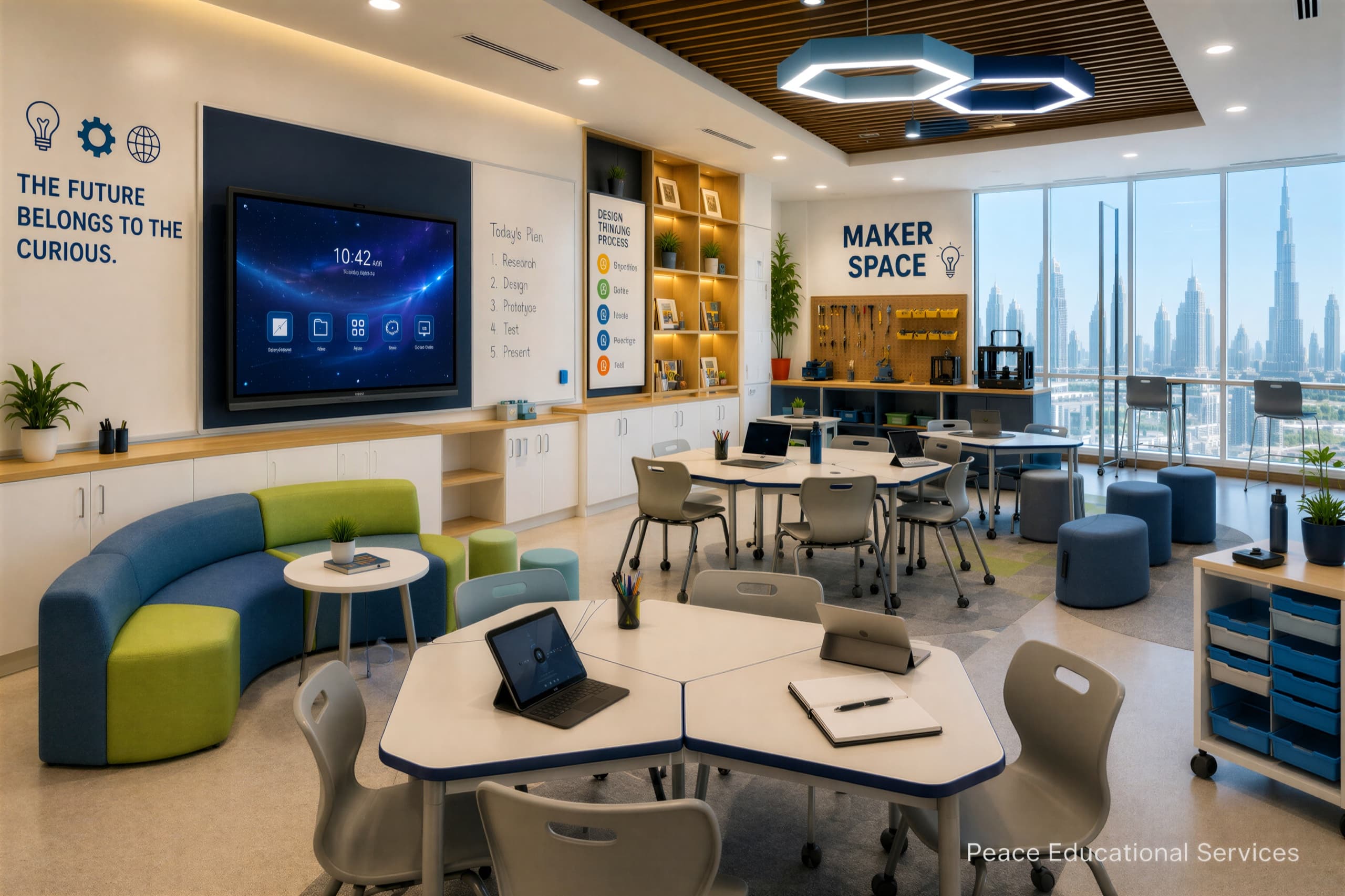
A room specified for making rather than for watching

Next school

The argument

The room decides the lesson more often than anyone admits.

Most school buildings are designed once and taught in for thirty years. The room decides the lesson far more often than anybody admits: fixed rows produce a lecture, a dark corridor produces a bottleneck, a laboratory without services produces a demonstration the class watches. If a school is going to spend once, it should spend on the things that will still be right in 2040.

So this page is the specification we argue for. Rooms that can hold a lecture, four groups and a presentation inside forty minutes. Furniture that a teacher can move alone. Laboratories where the bench produces data rather than a puddle. A campus that treats shade, cooling load and running cost as design problems, because in this region they are the difference between a plan and a bill.

The technology sits inside that, never on top of it: displays chosen after the lesson plan, data that reaches a leadership team while a decision is still open, and the AI work we are building service by service. If it does not change what happens on a Tuesday, it does not get specified.

The specification

Nine things we specify differently.

Each one is a decision a school makes once, usually under time pressure, and lives with for a decade. These are the positions we take into that conversation.

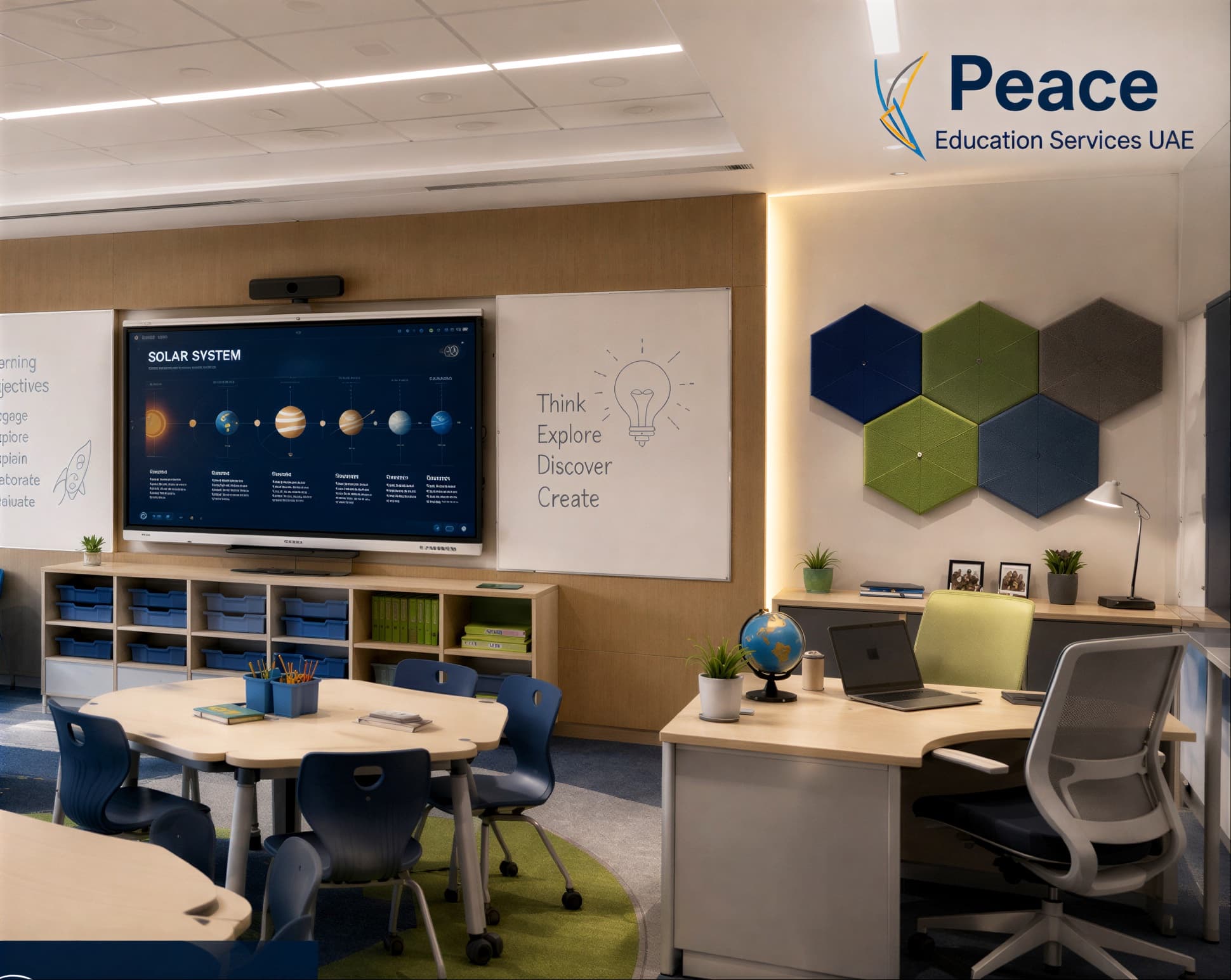
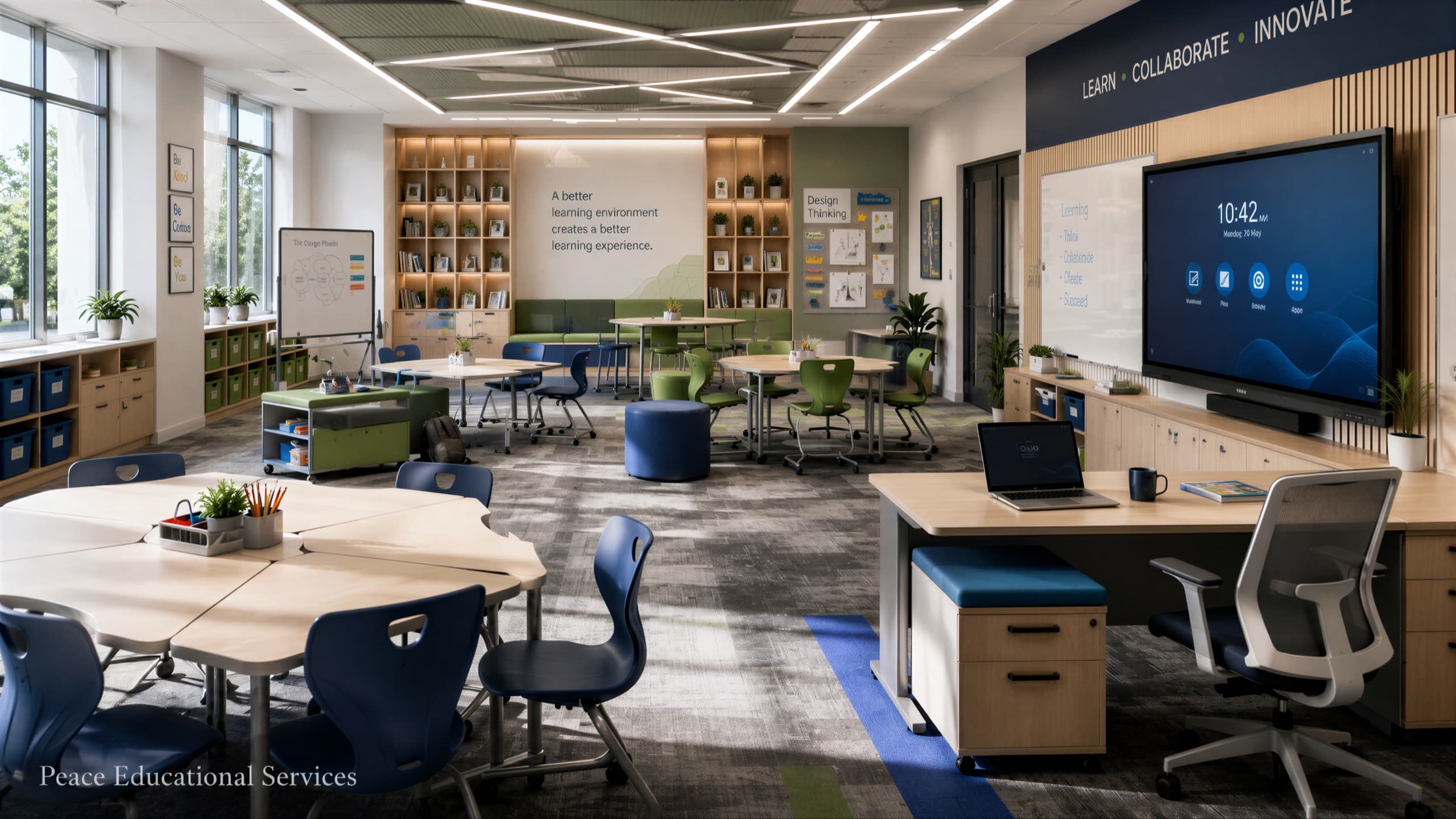
  • A bright, uncluttered teaching room whose layout is not decided for the teacher

    Classrooms that reconfigure

    One room that can be a whole-class explanation, four working groups and a presentation inside a single lesson — because that is what a modern scheme of work asks for, and fixed rows quietly forbid it.

    What changes

    A teacher changes the layout in ninety seconds, alone, without asking maintenance.
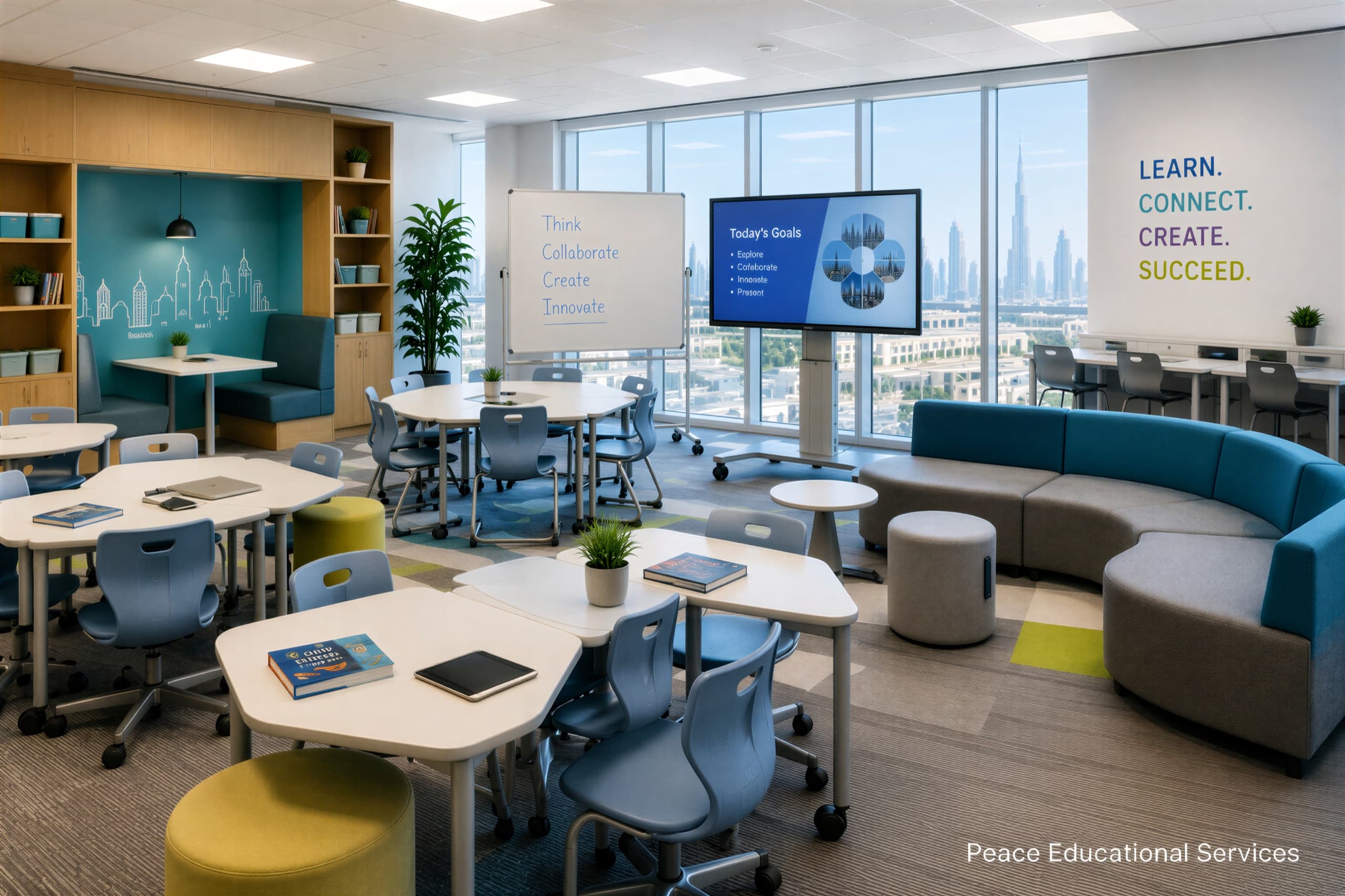
  • Furniture a teacher can move alone, in a room that expects to be rearranged

    Benches and furniture that move

    Modular tables and tiered benching sized by age band, on castors where it matters, with power and charging where the work actually happens rather than where the socket was cheapest.

    What changes

    Furniture that survives a decade of daily reconfiguration and still closes flat.

  • A campus where daylight, shade and planting were designed rather than inherited

    Campuses built for this climate

    Daylight without solar gain, circulation that survives changeover, shaded outdoor teaching that is usable nine months a year, and a facade specified for a maintenance budget rather than for a render.

    What changes

    A building that is still pleasant to teach in during May, and affordable in August.

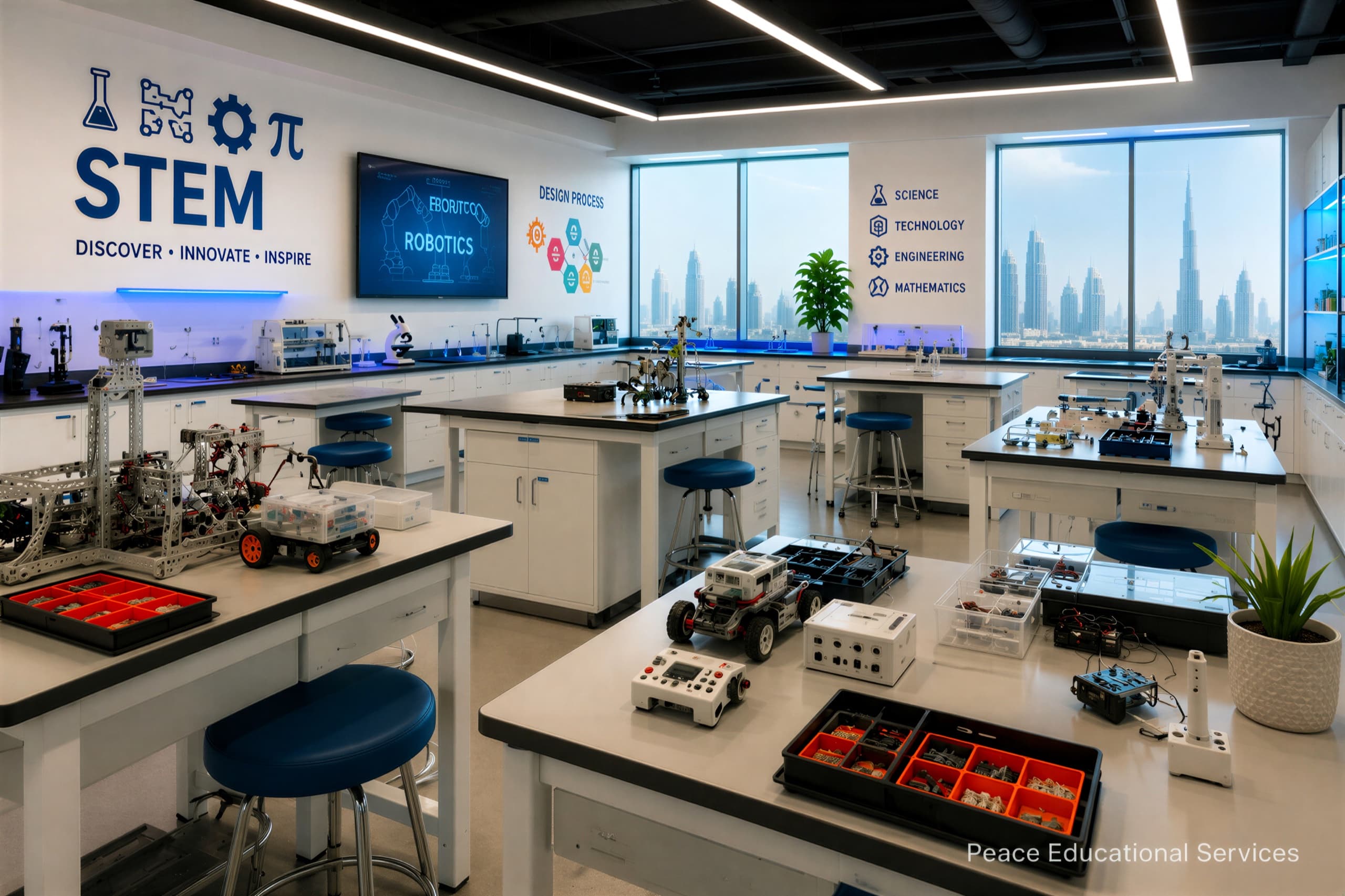
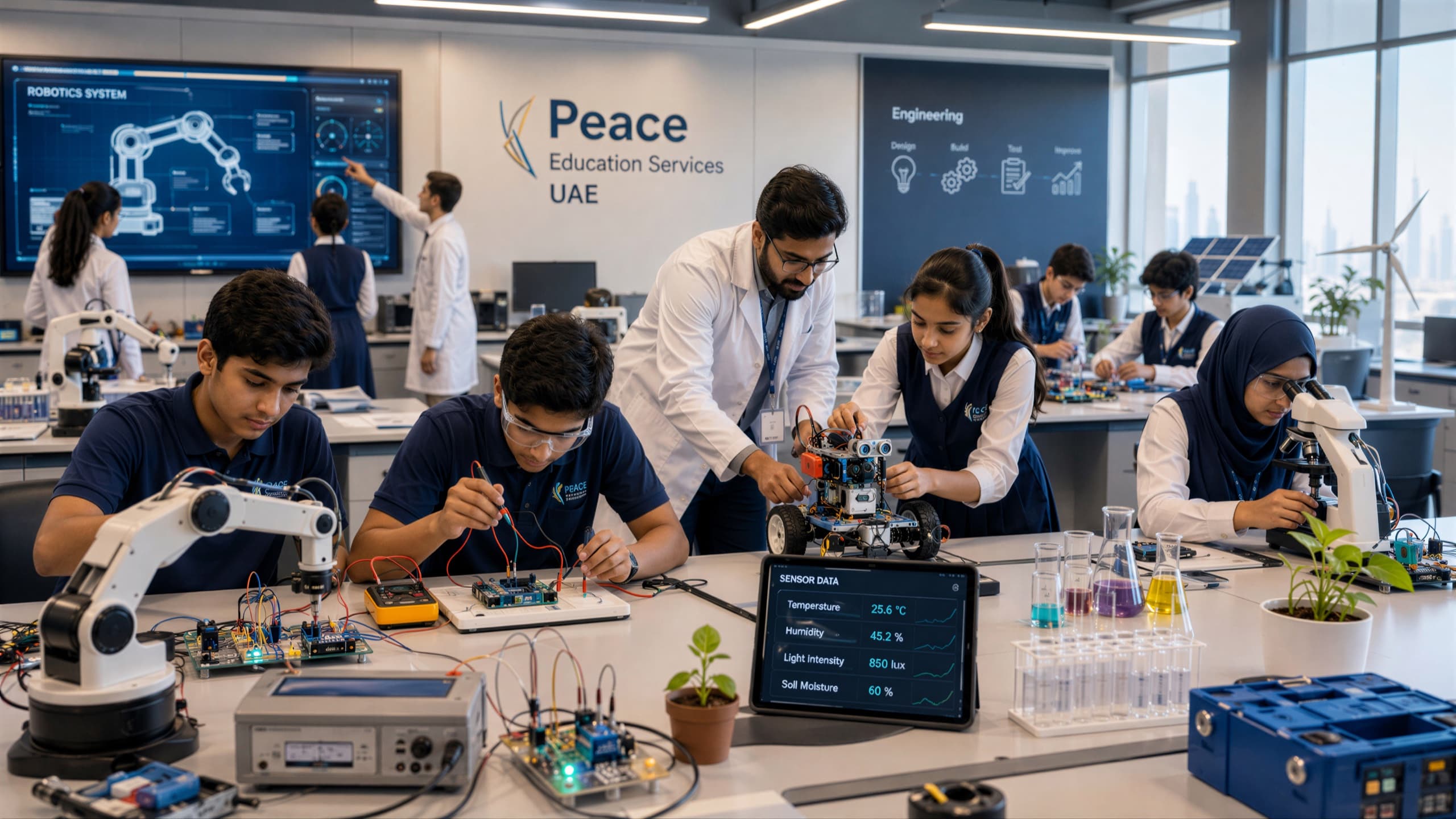
  • A laboratory specified so that the experiment ends in data rather than in a queue

    Laboratories that produce data

    Services at the bench, sensors and data logging as standard, storage that keeps a technician sane, and safety designed into the room instead of added to it after an inspection.

    What changes

    A practical that ends in analysis in the same lesson, not in a queue at one sink.

  • A central space that carries study, making and presentation without a librarian policing it

    A learning commons, not a silent library

    The library rebuilt as the centre of the school: study, making, quiet, group work and presentation in one space, zoned by acoustics rather than by rules on a wall.

    What changes

    A space that is busy at four in the afternoon because students choose to be in it.

  • A hall specified for the whole timetable rather than for the opening photograph

    Sport and activity as timetabled space

    Halls, courts and activity rooms sized for the timetable they have to carry, with surfacing, sightlines and storage that let two sessions run at once without either one shouting.

    What changes

    Every child gets their allocation, in the term the plan promised it in.

  • A display specified for a lesson, with the training and the data terms settled first

    Technology chosen after the lesson

    Displays, panels and network capacity specified against the teaching they have to serve, with the training plan written before the purchase order and the data agreement signed before installation.

    What changes

    Equipment that is still in daily use in year three, not stacked in a store cupboard.

  • A making space where the kit is used to build rather than displayed to visitors

    Making, robotics and AI in the same room

    A space where a class can build something that learns: robotics and machine-learning kits, prototyping tools, and the bench discipline that keeps them working after the launch assembly.

    What changes

    Students who can explain how a model was trained, and what it got wrong.

  • The stage at which running cost is still a design decision rather than a bill

    Power, water and running cost

    Solar where it pays for itself, metering that shows which building is wasting what, and cooling and water loads treated as a design decision rather than a monthly surprise.

    What changes

    A running cost the finance committee can forecast, and a lower one.

The specification, in one view

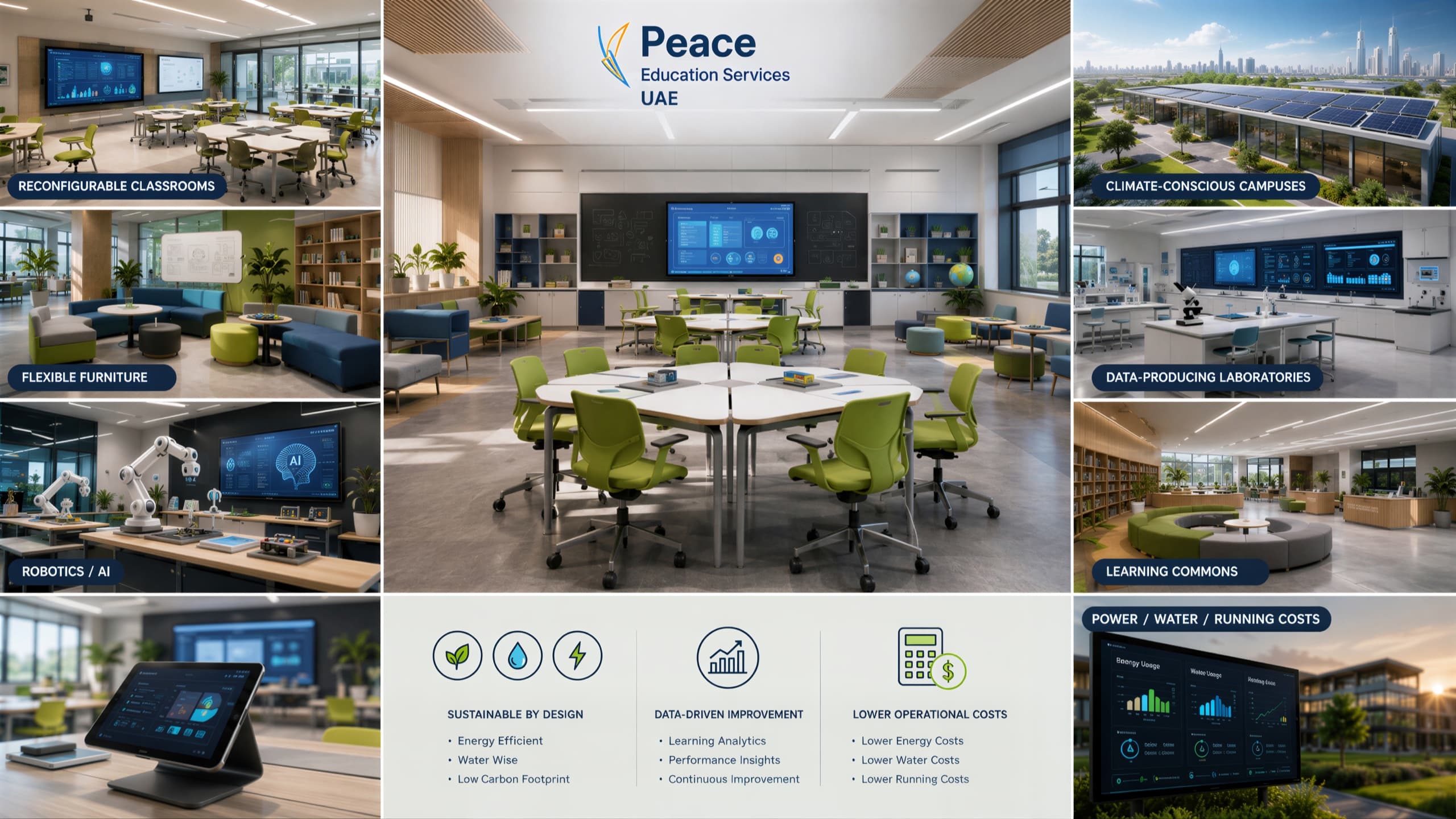
A grid of visualisations: reconfigurable classrooms, flexible furniture, robotics and AI, climate-conscious campuses, data-producing laboratories, learning commons, and the running-cost dashboard behind them
The nine positions above, drawn together. A visualisation of the standard we argue for — not a photograph of a completed project.

Method

How we specify.

  1. The lesson decides the room

    We start from the scheme of work and the timetable, never from a product catalogue or a render.

  2. Nothing that needs a specialist to reconfigure

    If a teacher cannot change it alone in two minutes, it will be left as it was found.

  3. Costed over ten years

    Purchase price, consumables, maintenance and replacement in one number — the only comparison that is honest.

  4. The training ships with the thing

    Anything installed without a training plan is a future store cupboard. We will say so before you buy it.

The software half

The software side is on every service page.

The buildings are half of it. The other half — screening applications against a specification, early-warning analytics, lab data reaching a spreadsheet in the same lesson, a notice a family reads in the language they speak at home — sits under “Looking ahead” on each of the thirteen service pages, labelled as in development because that is what it is.

Open the services

Start the conversation

Tell us what you are building.

Whether it is one classroom, a laboratory or a campus that does not exist yet, the earlier we are in the conversation the more of this is still possible.

Start an enquiry